VirtualProperty.my
Virtual Tours · Digital Twins
Virtual Site Visits: How 360° Tours and Digital Twins Are Changing Property & Venue Viewing
Physical viewings still matter — but they're no longer the first step. Increasingly, the first walkthrough happens online, and it decides whether the in-person visit ever gets booked.
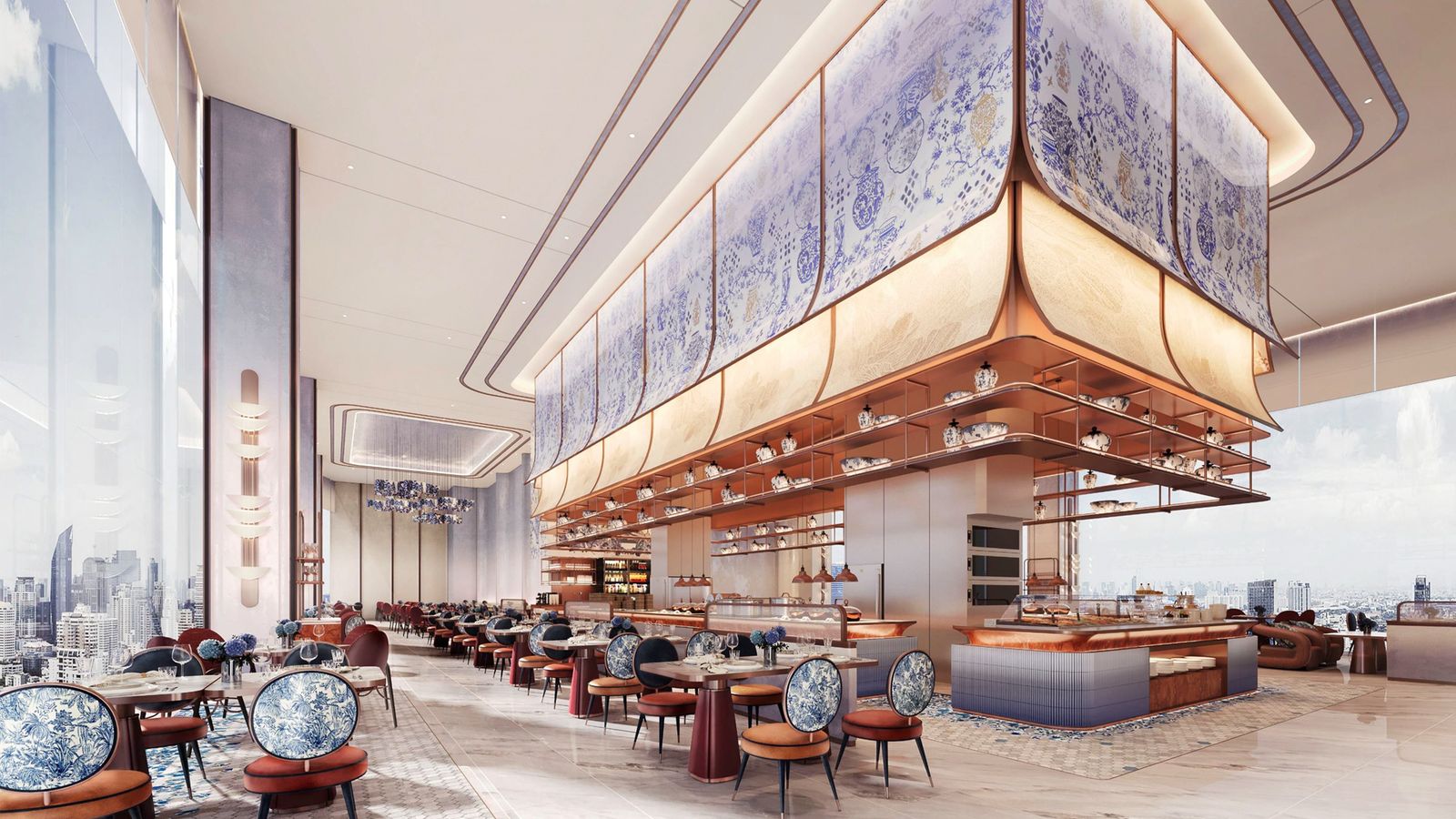
A captured interior becomes an explorable virtual site visit — viewable on any device.
For years, a virtual tour was treated as a nice extra — something you added to a listing after the photos. That has changed. When someone can walk through a home, a hotel suite or an event hall from their phone, the online experience becomes the shortlist. A well-made virtual site visit doesn't replace the physical viewing; it earns it.
This guide explains what a virtual site visit actually is, how it's produced, and how developers, venues and hospitality operators use it to sell and market physical space more effectively.
What Is a Virtual Site Visit?
A virtual site visit is an online experience that lets someone explore a physical property or venue remotely, using technologies such as 360° photography, interactive virtual tours or a Digital Twin. Instead of scrolling through a set of flat photos, the viewer moves through the space, looks in any direction, and builds a genuine sense of layout and scale — from anywhere, at any time.
It's the difference between looking at a space and moving through it. That shift is what makes people feel confident enough to enquire.
How Virtual Site Visits Work
The production pipeline is simpler than it looks, and every stage builds on the last:
- Capture — the space is recorded on site using 360° cameras, DSLR panoramic photography, LiDAR or Matterport scanning.
- 360° / 3D / Digital Twin — the captured data is processed into a navigable tour or a full 3D model of the space.
- Interactive online experience — the result is published to a link or embedded in a website, with hotspots, floor plans and information overlays.
- Remote exploration — anyone with the link can walk through the space on desktop or mobile.
- Enquiry or site visit — interested viewers reach out already informed, so the conversation starts further along.
The key point: once a space is captured, the same asset can be reused across a website, ads, presentations and social media without going back on site.
360° Virtual Tour vs Digital Twin
These terms are often used interchangeably, but they aren't the same thing.
A 360° virtual tour is a visual walkthrough built from connected panoramic images. You jump between points and look around in every direction. It's fast to produce and ideal for showing how a space feels.
A Digital Twin is a measurable, dimensionally accurate 3D model of the space. On top of the walkthrough, it supports things a set of panoramas can't — accurate measurements, floor plans generated from the scan, and spatial data. If a tour answers "what does it look like?", a Digital Twin also answers "how big is it and how does it fit together?"
A tour shows you the space. A Digital Twin lets you interrogate it.
How Property Developers Use Virtual Site Visits
For developers, a virtual site visit works hardest exactly when a physical viewing is hardest to arrange.
- Pre-launch marketing — show a show unit, or a 3D / CGI version of one, before the building exists.
- Remote buyer engagement — let buyers explore at their own pace instead of waiting for a gallery appointment.
- Sales presentations — sales teams can walk a client through a unit on screen, consistently, every time.
- International and out-of-state buyers — people who can't fly in can still commit with confidence.
- Project showcasing — an entire development, from façade to interiors, presented as one connected experience.
- Lead qualification — buyers who book a viewing after a virtual walkthrough tend to arrive more serious and better informed.
How Event Venues Use Virtual Site Visits
Event planners shortlist venues long before they visit one. A virtual site visit puts a venue on that shortlist.
- Venue discovery — planners find and compare spaces online.
- Event planning — understanding flow, entrances and staging areas without being on site.
- Remote site inspection — a first "walkthrough" that filters out unsuitable venues early.
- Space understanding — a genuine sense of capacity, ceiling height and layout.
- Client presentations — planners can present the venue to their own clients before booking.
How Hospitality Businesses Can Use Virtual Site Visits
In hospitality, the booking decision is made on confidence — and confidence comes from being able to see the real thing.
- Rooms — guests preview the exact room type they're considering.
- Facilities — pools, restaurants, function spaces and lobbies shown as they really are.
- Resort experiences — grounds and surroundings explored as one journey.
- Pre-booking confidence — fewer surprises on arrival, and a stronger reason to book direct.
Benefits of Virtual Site Visits
The advantages are practical rather than gimmicky:
- Remote accessibility — anyone, anywhere, on any device.
- Reduced friction — no appointment needed to take the first look.
- Stronger visual communication — layout and scale land in a way photos can't convey.
- Better pre-qualification — enquiries arrive already informed.
- Increased engagement — people spend longer exploring than scanning a gallery.
- Easier sharing — one link travels through WhatsApp, email and social.
- Marketing reuse — one capture feeds websites, ads and presentations.
What Technology Is Used?
Different tools suit different spaces and budgets, and they're often combined:
- Matterport — scans a space into a photorealistic, measurable Digital Twin.
- 360° photography — fast, high-impact panoramic walkthroughs.
- DSLR panoramic photography — higher image quality for premium spaces.
- LiDAR — precise spatial measurement and 3D geometry.
- 3D modelling — for spaces that don't exist yet, or need styling.
- Aerial capture — drone 360° and stills for location, access and surroundings.
- Digital Twins — the connected, measurable version of all of the above.
When Should You Use a Virtual Site Visit?
As a rule of thumb: use one whenever the physical viewing is expensive, slow, or far away for your audience. That includes pre-launch developments where the unit isn't built, listings aimed at out-of-town or overseas buyers, venues being compared remotely, and hospitality properties competing on booking confidence. If the decision depends on someone understanding a space they can't easily stand in, a virtual site visit is the right tool.
Frequently Asked Questions
What is a virtual site visit?
A virtual site visit is an online experience that lets someone explore a physical property or venue remotely using technologies such as 360° photography, interactive virtual tours or a Digital Twin.
What is the difference between a virtual tour and a Digital Twin?
A 360° virtual tour is a visual walkthrough made of connected panoramas. A Digital Twin is a measurable, dimensionally accurate 3D model of the space that can power tours, floor plans and spatial data on top of it.
Can virtual site visits be used for property marketing?
Yes. A virtual site visit lets a listing be explored 24/7 from any device, attracts more qualified enquiries, and can be embedded in microsites, ads and social media.
Can buyers explore a property remotely?
Yes. With a 360° tour or Digital Twin, buyers can walk through rooms, check layout and judge scale before visiting in person — especially useful for out-of-state and overseas buyers.
Can event venues use virtual tours?
Yes. Planners can inspect a venue's spaces and flow remotely, understand capacity and layout, and shortlist venues before scheduling a physical inspection.
VirtualProperty.my is powered by Novo Reperio Sdn Bhd, a Malaysian spatial technology company specialising in Reality Capture, Digital Twins, 360° Virtual Tours, 3D visualisation and immersive digital experiences.